Posts

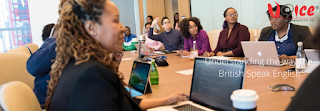
Understanding the way the British Speak English
Image
  Spoken English is in a constant state of change. For this reason, you may find that idioms you learned in class are no longer used by most Brits in their everyday conversations. If you use outdated idioms, it can have funny and embarrassing results as locals may find you’re English rather strange or eccentric. Therefore, it is important to listen to as much modern English speech as possible and to get feedback from a British friend or teacher to find out what is “in” and what is “out”. Below are a couple of examples of traditional idioms and their modern conversational English equivalents: A piece of cake – As this now sounds like an old-fashioned cliché, most Brits would use the expression “No probs!” (No problem) instead. Note that the “-s” on the end must be used even though “No Problem!” uses the singular form of the noun. Cost an arm and a leg – Brits are more likely to use colloquial equivalents like: “Cost a bomb” (a lot of Money, too much) or “Rip-off” (not wort...


Cultural Impact in English Language Learning

Image
  English language learning and teaching involves more factors than cognitive functioning or phonetic development. Cultural influence of both the native and target cultures impact learning styles, instruction approached and language skills such as listening or speaking. Cultural education provides insight to the relationship between cultural backgrounds and language learning; awareness of cultural impacts on English language learning can influence classroom decisions and lead to an increase in positive learning outcomes. English language learning and teaching involves more factors than cognitive functioning or phonetic development. Cultural influence of both the native and target cultures impact learning styles, instruction approached and language skills such as listening or speaking. Cultural education provides insight to the relationship between cultural backgrounds and language learning; awareness of cultural impacts on English language learning can influence classroom decisi...

How to Navigate Difficult Conversations in Writing

Image
  Some conversations just aren’t easy Breaking bad news to someone, finding a respectful way to disagree, asking a favor, or reviewing a situation that didn’t go well—these are all hard things to do, perhaps especially when so many conversations now occur in writing and not face-to-face. A few pointers given here if followed can make such writing concise, clear, and insightful. Tough conversations don't have to be so stressful. Opening the conversation Start by showing empathy while being direct about what’s going on. Without tiptoeing around the subject, make clear you’ve given thought to how it will land with the recipient, and that you want to avoid confusion or making things harder.   For example: When giving bad news: I’m sorry to have to tell you this, but the repair process will be more extensive than we’d initially hoped. It can also help to make clear at the outset that you’re trying to advance the conversation toward some kind of resolution, as in th...

Bring life to Business Writing

Image
  Verbs are the backbone of sentences. Honing strong verbs is the single best strategy for clear writing . Focusing on strong verbs also naturally resolves many other syntax problems, especially passive voice used incorrectly and clause sequencing errors. Smothered Verbs are Action Words that are buried in a Group of other Words. ·          Eliminating the other words creates a clearer, more forceful sentence. ·          Smothering phrases often begin with a form of be, give, have, make or take. ·          The noun in the phrase often ends with -ion or -ment. ·          Smothered Verb Examples ·          Be in agreement ·          Give consideration to ·          Have a suspicion ·  ...

Confident Speaking That Commands a Room

Image
  Learning to speak with confidence is one of the best things you can do for yourself as a presenter. Speakers without it have a very difficult time connecting with the audience because they’re lost in their own nervousness rather than focusing on their delivery and cultivating an audience connection. Not only does the audience feel less connected, but they’ll also have a difficult time trusting or believing what you have to say. After all, if you can’t trust yourself to deliver your message confidently, why should they? So, how does one elevate them from feeling nervous and hesitant to speaking with confidence that commands a room? It’s actually easier than you might think. The following techniques are simple things you can do to increase your confidence levels and deliver an inspiring presentation every time. Strike a Power Pose A power pose is when someone stands with their hands on their hips for two minutes prior to presenting.   Research found that the people who ...

Public speaking - Tips to Look More Confident Even if you are not

Image
  The art of becoming a crowd puller is learnt overtime and a few make overs in the style of presentation this article gives a few important tips to develop public speaking skills with ease. 1. Surround You with the Right People Be around the right people. When you are around people who are negative and always pessimistic, sooner or later their energy will pull you down as well. When you are around positive people, sooner or later their energy will rub off on you as well and you will become much more positive with your life also. If you can’t meet super positive and successful people in real life, follow them on Facebook or Twitter. If they have a YouTube channel, consume all their videos. If they have a Blog, read it religiously. The bottom line is, in the age of the internet, you have no excuses. 2. Focus on Your Strengths When you focus on your weaknesses all the time, your self-esteem is bound to be very low. The reason is that if you only focus on your weaknesses,...

Clichés to Avoid in Writing

Image
  What is a Cliché? A cliché is a word or phrase that has been overused in writing. Clichés such as “leave no stone unturned” have been used so much in writing that they have lost all their effectiveness. These phrases have become weak and meaningless. They usually contribute nothing to the message you are trying to convey and will be viewed, by the reader, simply as padding. Text full of clichés makes the writer appear lazy and uncreative and will, for many readers, kill the significance of the writing. If you want your writing to be fresh and interesting, you should avoid using clichés.   Try rephrasing your text to make it more concise and original. Ask somebody else to proof-read your work to help ensure that you are not using clichés or other unnecessary padding words and phrases. Clichés (properly spelled clichés, with the acute accent) are words and phrases, once interesting, which have lost their original effect from overuse. They are considered trite and sh...